THE NEXT CHAPTER IS YOURS

Paid readings

Your free reading reads your patterns and standards. A paid reading opens where those patterns show up in money, work and close relationships, and looks at the stretches where your way with money and the year's direction change.

The three that follow your free reading

Each one shows its chapters up front. Start with what you are curious about now.

A Korean man in a black hanbok embroidered with gold thread stands by a pine and looks into the distance, layered teal ink mountains and mist behind him on warm hanji paper, a coral-red plum branch, a soft vermilion sun and a constellation of fine stars.

Start here

New here? Start with the full reading. It carries the patterns from your free reading on into work and relationships.

Full reading

Good at seeming fine, still stuck in the same place alone — work, relationships and this year read as one.

What you open

  • The night you said you were fine in front of everyone, and the sentence kept circling once you were home
  • The flaw that reaches your eye before the praise does, and the comment you swallow and carry alone
  • Why the words are exact at work and blunt with the people closest to you
  • Where the rest of this year is best spent first
WHAT YOU RECEIVE

Four or five chapters: how the grain gets used at work, where it misses the people closest to you, and which way it leans this year and next, each read through a scene. Every chapter carries a “what this is read from” drawer, one question to check and one thing to try that week. Pay once and read it again anytime.

Read a sample passage

A real passage, read from someone else's record. Oddly enough, one of these lines tends to catch.

At a family meal, someone confidently says something wrong. Everyone just nods, but you cannot hold back and correct it. You even look it up on your phone and show them the screen. You were right, and the table fell quiet. Only then do you notice that person's ears have turned red.

Enter your birth details to read the free result first, then review each reading’s scope before choosing.
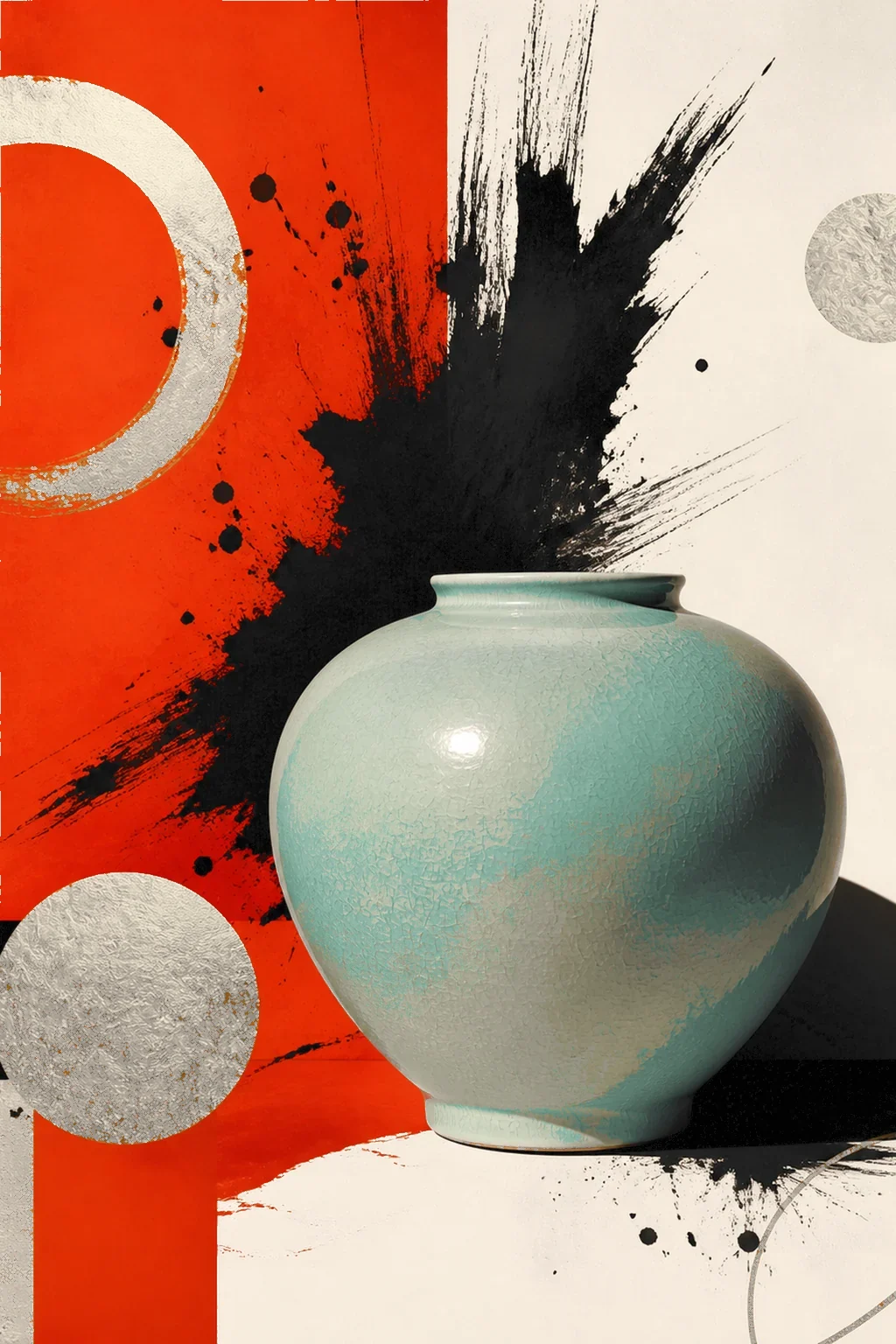

A celadon moon jar sits on a vermilion field, a pale gold ring at the upper left, a wide black ink splash behind it and ink drops scattered below.

Chosen alongside it

Money reading

Why it never stays, however much comes in — not spending, but the places it leaks.

What you open

  • The meal you paid for first, the money you lent, and never collected
  • What slipped out on every day someone called you a good person
  • Money that gets tied up every time you start something new
  • Which of the next ten years takes money out after people
WHAT YOU RECEIVE

Four chapters, one each on where money comes in, how you earn, where it leaks and when your way with money changes. Each chapter carries a “what this is read from” drawer and one question to check, so you can see where the sentence comes from. It closes on how your money moves, and covers ten years from the year of your free reading.

Read a sample passage

A real passage, read from someone else's record. Oddly enough, one of these lines tends to catch.

You pay for the meal first, agree to be paid back later for something bought together, and in the end let it go. A little slips away at every table where you are called a good person, and if such tables keep coming, over a year that little adds up to a lot.
Two figures in black hanbok stand shoulder to shoulder looking the same way, coral petals drifting past, teal ink mountains and a soft vermilion sun behind them.

Chosen alongside it

Relationship reading

The night it feels like only you mind the same promise — that spot read across two records.

What you open

  • Why the same promise leaves one of you hurt
  • The moment the counting of what you did for each other goes quiet
  • Why the first sentence after a fight is always yours
  • What to settle first to last with this person
WHAT YOU RECEIVE

Four chapters: finishing a shared task, what to check as you grow closer, talking again after a disagreement, and making the pairing work. Two mutually shared records read together, with dialogue examples and a question to check in every chapter.

Read a sample passage

A real passage, read from someone else's record. Oddly enough, one of these lines tends to catch.

The closer two people get, the more there is to check. Things once waved off as a difference in tone become everyday decisions once you share a home and a budget. Where you part is not in how much you feel but in how each of you checks: one asks and then decides, the other does it first and mentions it later.

Sign in and connect two records through an invitation link. Once the other person agrees to share, you can review the preview and purchase terms.

Self 2

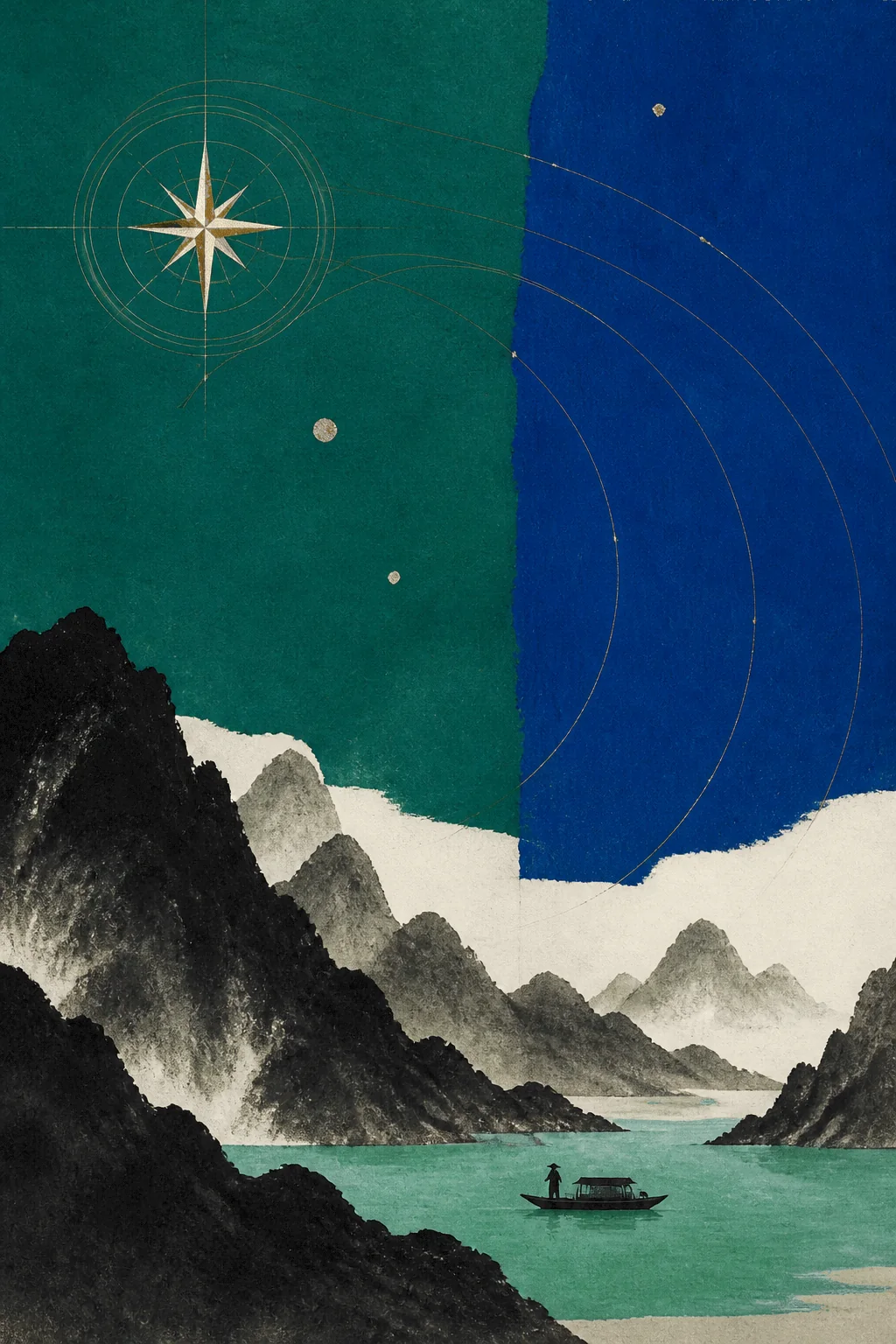
Layered ink mountains and a jade river under a split teal-and-cobalt sky, a small ferry with a boatman below, a gold compass and orbit lines at the upper left.

Movement reading

Whether the wish to leave is about the place or about your own position — sorted apart before you go.

What you open

  • The project where the share was never split fairly, and it still sits with you
  • Why the same problem follows you to the new place
  • The first month after the move, swallowing what should have been raised
  • The one condition to check before you go
WHAT YOU RECEIVE

Four chapters: the reason to leave, an ordinary day in the new setting, the conditions to keep afterwards, and what remains over several years. Each chapter brings a scene to bring to mind, a question to check and timing for this year and next. It does not tell you whether to move; it leaves you with what you are trying to keep.

Read a sample passage

A real passage, read from someone else's record. Oddly enough, one of these lines tends to catch.

Behind the wish to leave there is usually time you never decided for yourself. Follow someone else's order long enough and what stays is not whether it was right but that you never chose it. That is why the position of the decision, rather than the list of conditions, is what you see first.
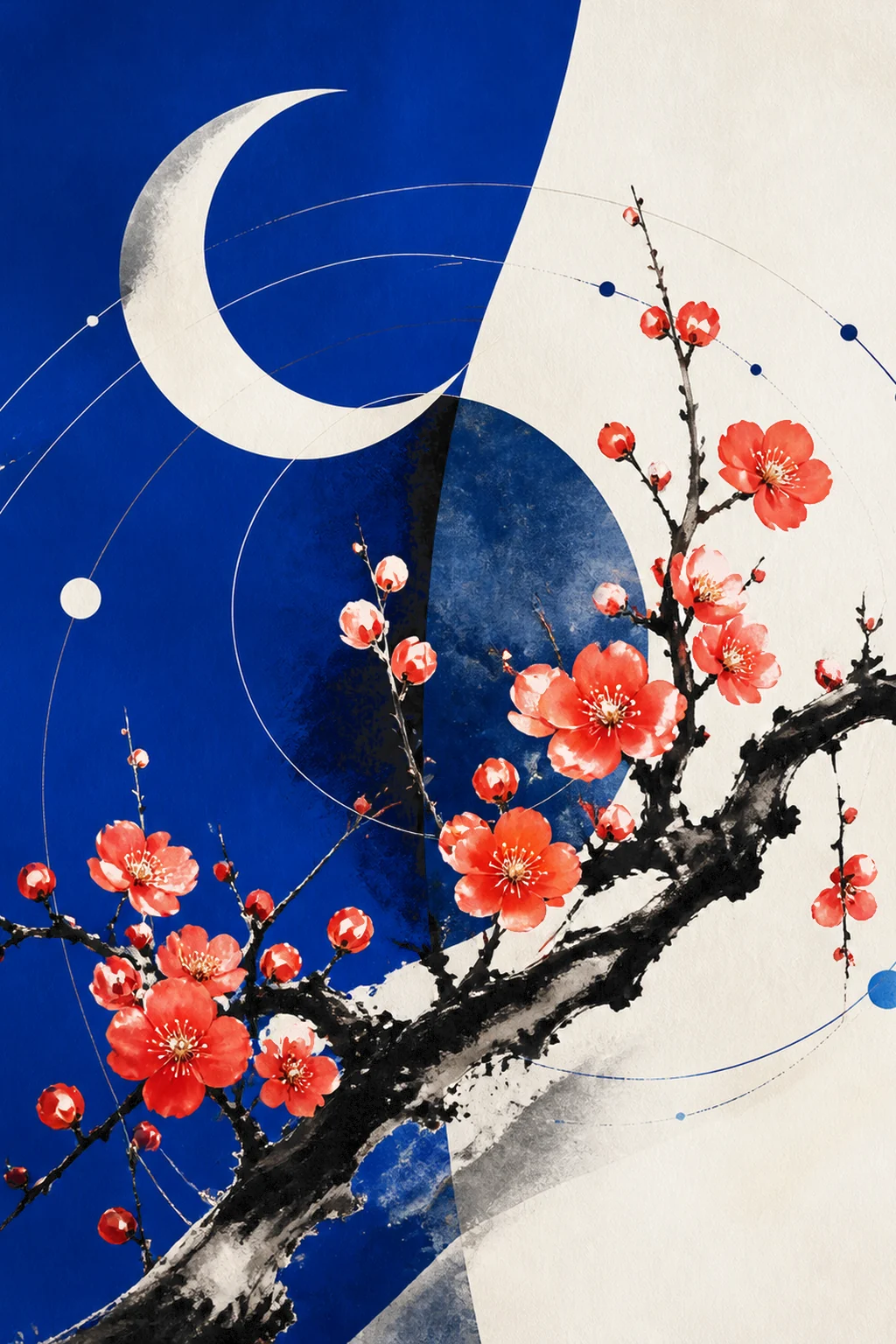
A coral-red plum branch sweeps across a page split diagonally between cobalt night and hanji paper, a crescent moon and fine orbit lines at the upper left.

Year reading

Which stretch of this year wore you down, and where the rest of it is best spent.

What you open

  • Why the first half of this year wore you down, and which stretch that was
  • Which stretch the decision you keep postponing sits in
  • That the same worry returns at particular stretches
  • Where the rest of the year is best spent
WHAT YOU RECEIVE

Twelve solar-term stretches. Each one reads work and relationships in two or three sentences, with a plain-words line, a question to check and something to set down. It closes with how to use this year.

Read a sample passage

A real passage, read from someone else's record. Oddly enough, one of these lines tends to catch.

The terms of work change in the weekday timetable before they change on a payslip. One more meeting, one fewer person to check with, a longer stretch of answering messages after you get home.

Children 2

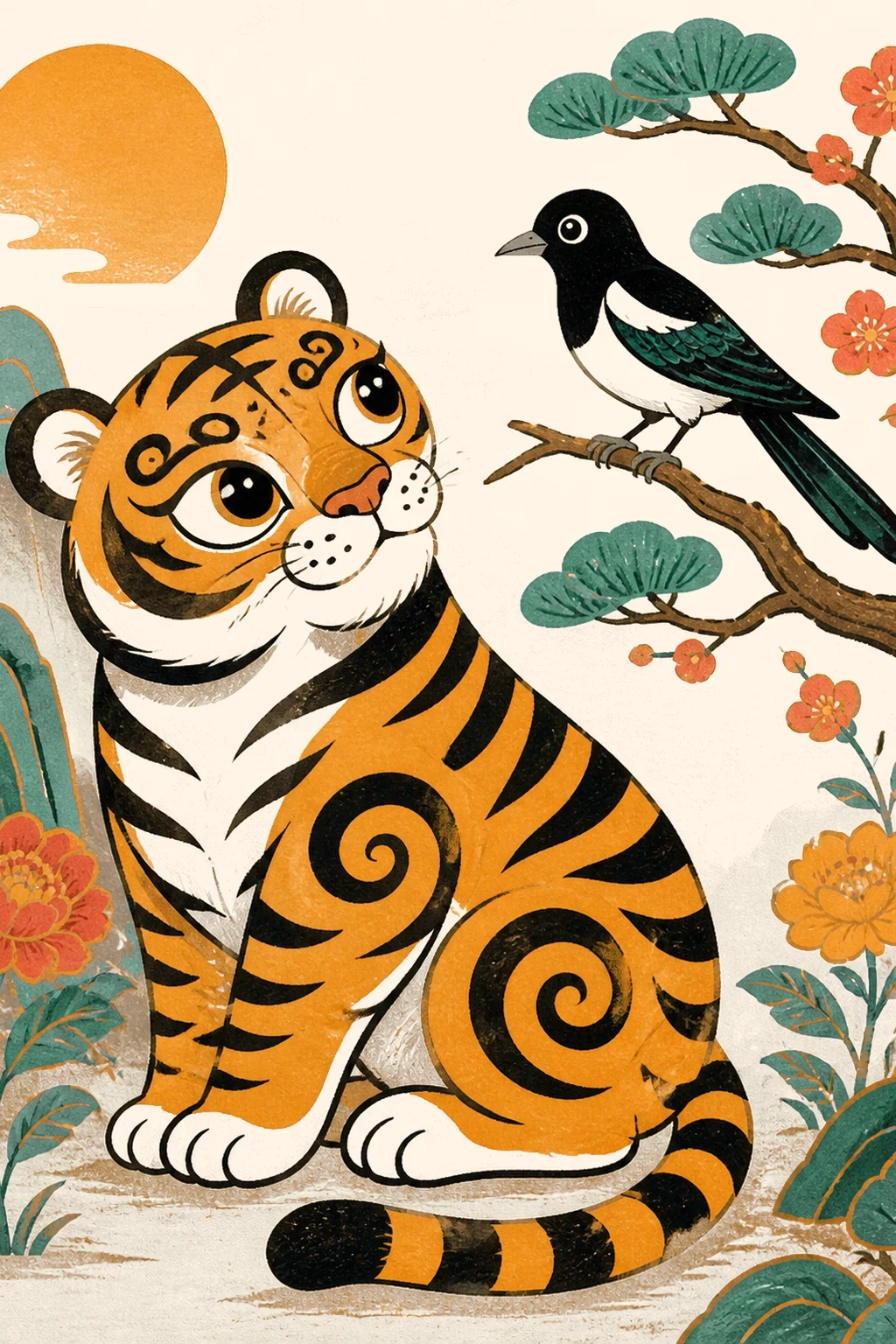
A modern minhwa pop-art ochre tiger and magpie face each other on warm hanji paper, coral blossoms and jade pine branches around them, a warm amber sun at the upper left.

Child reading

Some days at the same class leave the child far more tired — where they recover, read at their age.

What you open

  • Why some days at the same class leave the child far more tired
  • The condition under which a child who would not move starts on their own
  • The moment an adult decides what a behaviour means, and the child stops talking
  • The one decision about this term to settle now
WHAT YOU RECEIVE

Five to seven chapters, built from the child's chart at the child's age. Every chapter brings a scene to look at, something to try this week and a question to check — observation rather than a verdict.

Read a sample passage

A real passage, read from someone else's record. Oddly enough, one of these lines tends to catch.

When an order is dictated without choice, a hesitant start often meets adult nudges rather than an inquiry into their preference. When a clear portion of the task is left for them to choose, they may find it easier to start the activity.
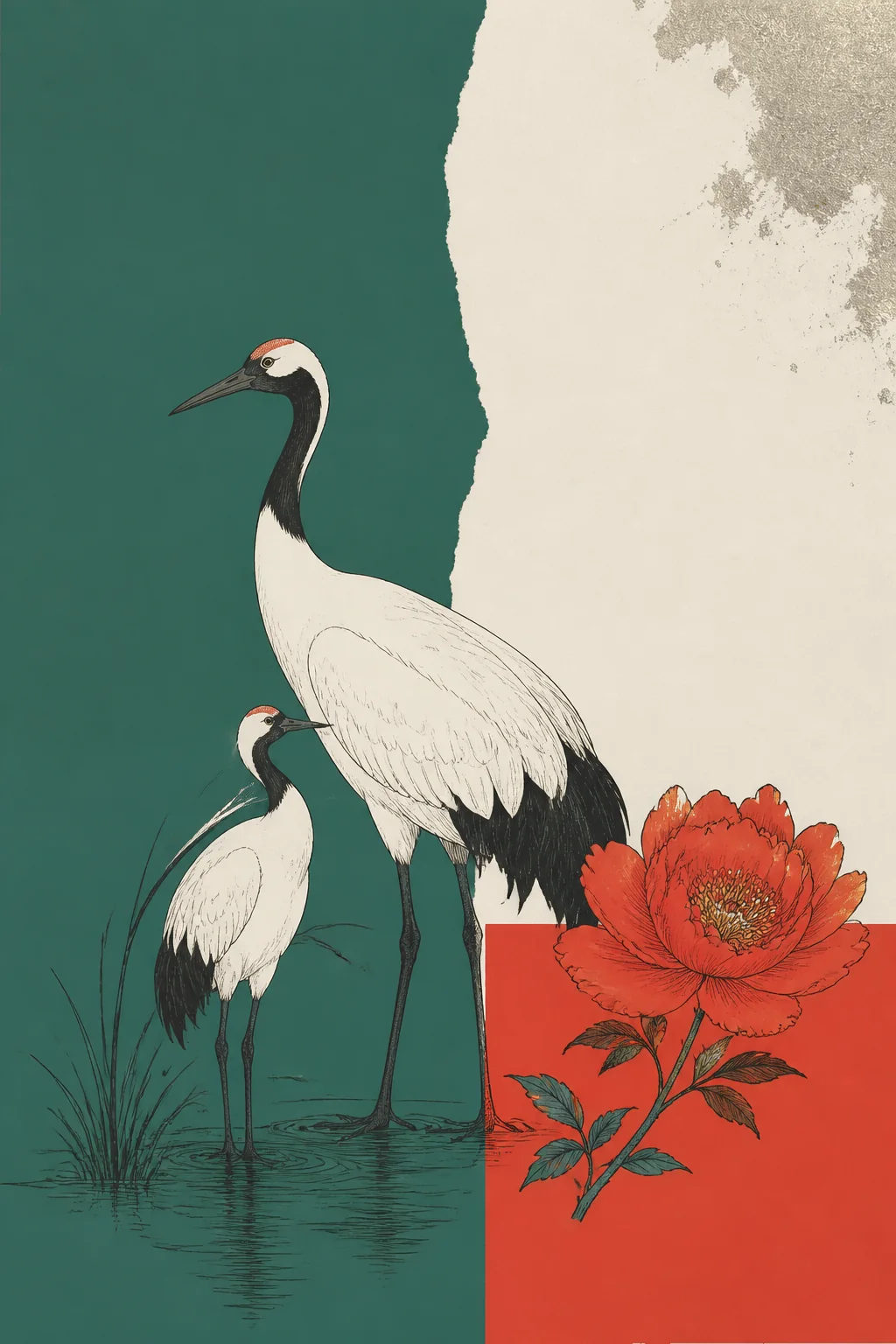
Two cranes, one large and one small, stand together in shallow water on a field split between jade green and hanji paper, a coral peony in bloom beside them.

Parent–child reading

The moment your help made the child stiffen — between your way and what they wanted.

What you open

  • The moment your help made the child stiffen
  • How the turn to try disappears while the explaining goes on
  • The first sentence after words have missed each other
  • Moving your own position instead of bending the child toward you
WHAT YOU RECEIVE

Four chapters: helping, a new routine, listening, and coming back. The caregiver's record and the child's are read together, with a scene and one thing to check in every chapter.

Read a sample passage

A real passage, read from someone else's record. Oddly enough, one of these lines tends to catch.

Help is usually decided at the moment it starts. On an evening when the child has the page open but only turns the pencil over, your hand goes to the answer first: you set the order, point at the wrong line, say to move on. How the child took that help shows in the next few minutes — whether they take one step on their own, or stop again the moment you leave the table.

Sign in, select the saved caregiver and child records, then review the preview and purchase terms.

Stories 3

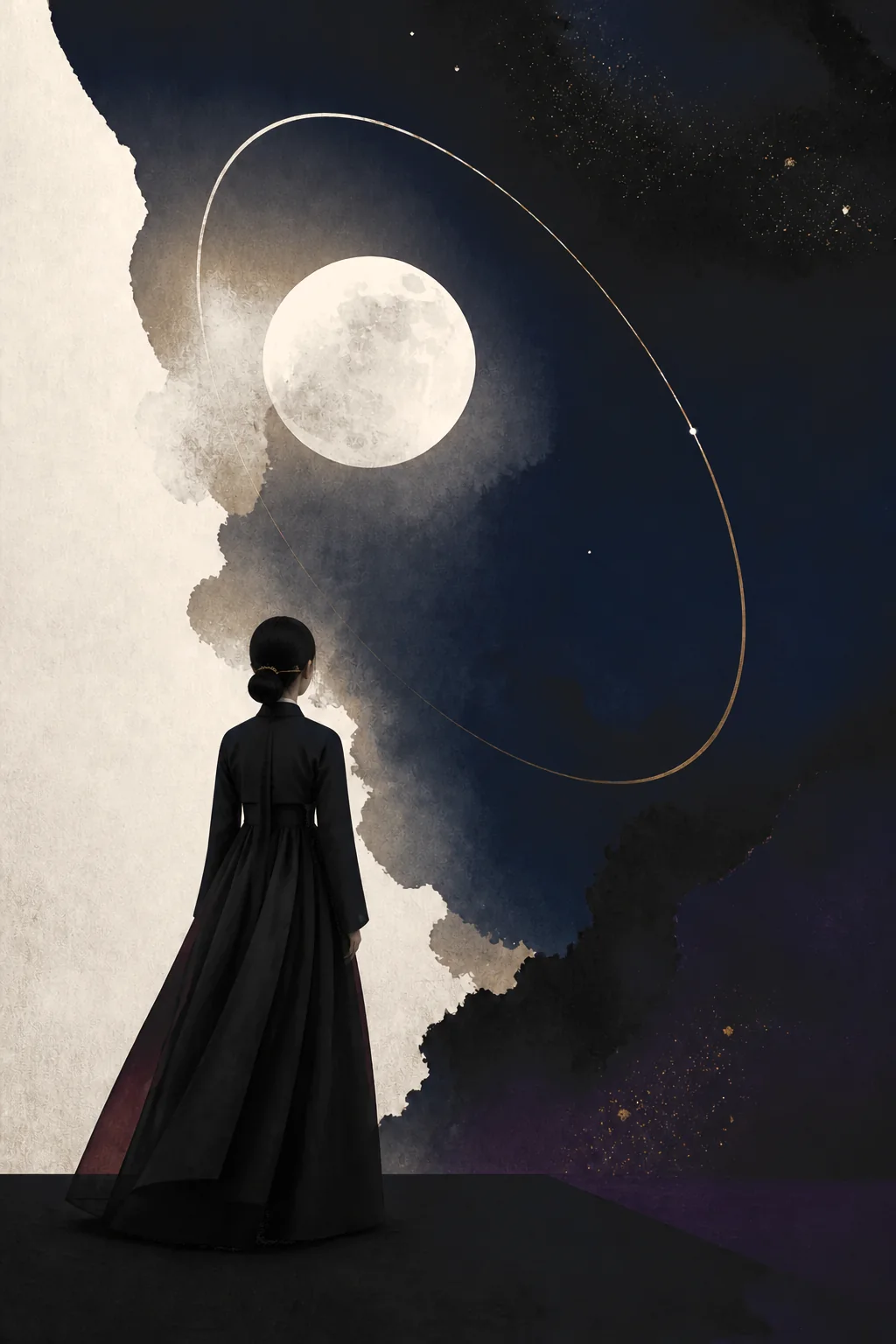
A woman in a black hanbok with a red inner lining stands alone under an ink-wash full moon on split hanji paper, a thin gold orbit arcing around her, gold stars scattered in the midnight navy.

Past-life main story

If your eight characters had been born in another era — a seven-act story with your card and five plates.

What you open

  • Which trade your chart would have held in another era
  • A scene like the half day spent finishing an inside nobody paid for
  • One card front and five plates set between the acts
  • The last line that stays with you
WHAT YOU RECEIVE

A seven-act work of fiction. Acts 1–2 are free to read before you buy; the main story brings the other five acts, the card front, five plates set across Acts 1, 3, 4, 5 and 6, and the “why this past life?” panel. Pay once and read it again anytime.

Read a sample passage

A real passage, read from someone else's record. Oddly enough, one of these lines tends to catch.

It was true that nobody looks at the inside. That was why it came first for you. For you, the work was finished not on the day the outside was done but on the day the inside was. So you were always slower than the others. You heard the word slow for years and did not mend it.
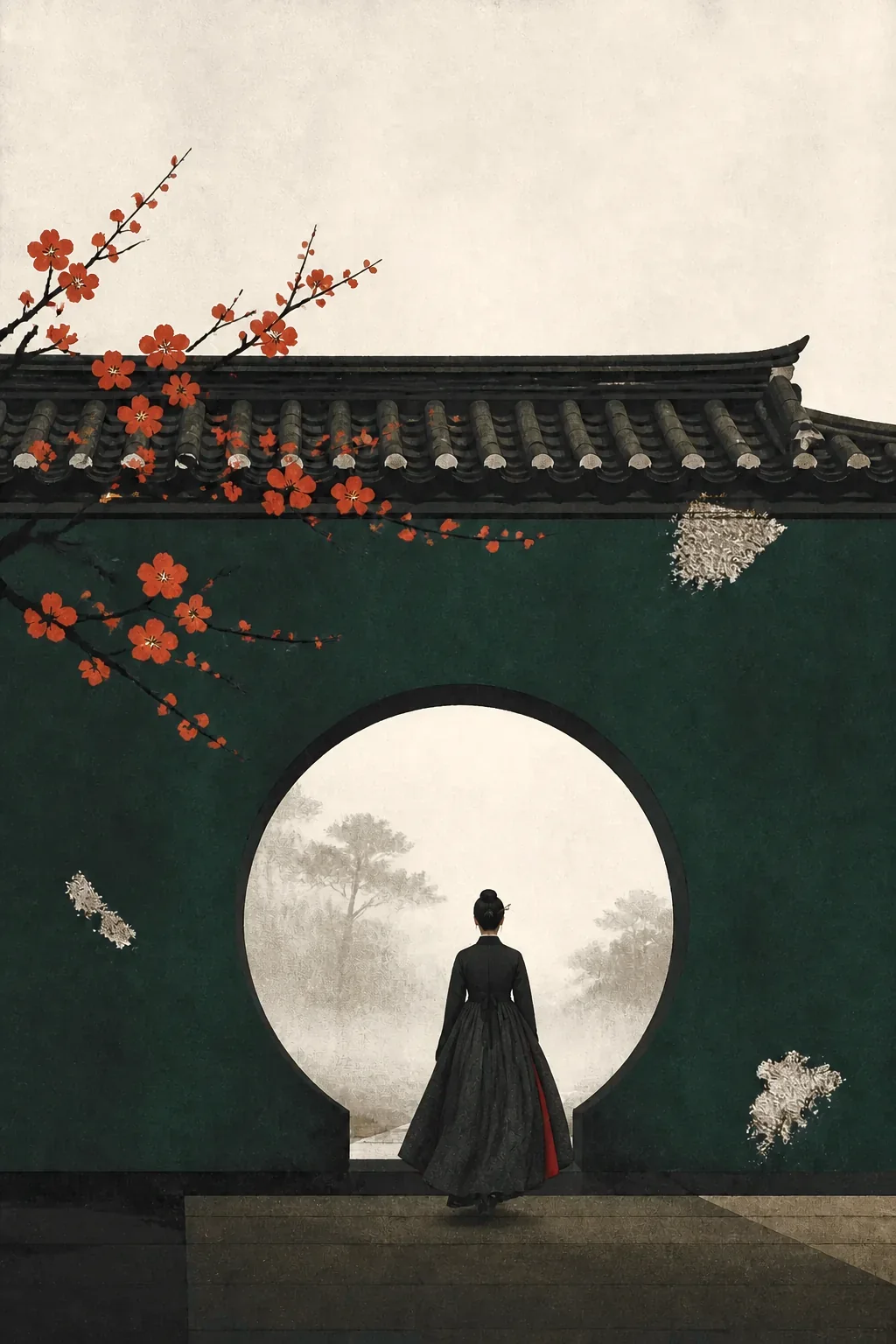
A woman in a black hanbok walks through the round moon gate in a jade wall, a red plum branch crossing above her, misty pines beyond, the red of her lining showing at each step.

One past-life expansion

The same grain living a day in another era — one story, chosen by you.

What you open

  • One other era of your own story, on its own
  • The same Maker becomes a different trade in Joseon, Edo, Florence and New York
  • One story still brings its card front and its plates
  • A story that reads without the main volume
WHAT YOU RECEIVE

One expansion: a seven-act story with its card front and its plates. Sold separately from the main story; only the one story you choose opens.

Read a sample passage

A real passage, read from someone else's record. Oddly enough, one of these lines tends to catch.

That person put their hands behind them and then brought them out to the front again. The face said that hiding them was the stranger thing to do. You said that you had seen them. Having said it, you startled yourself.
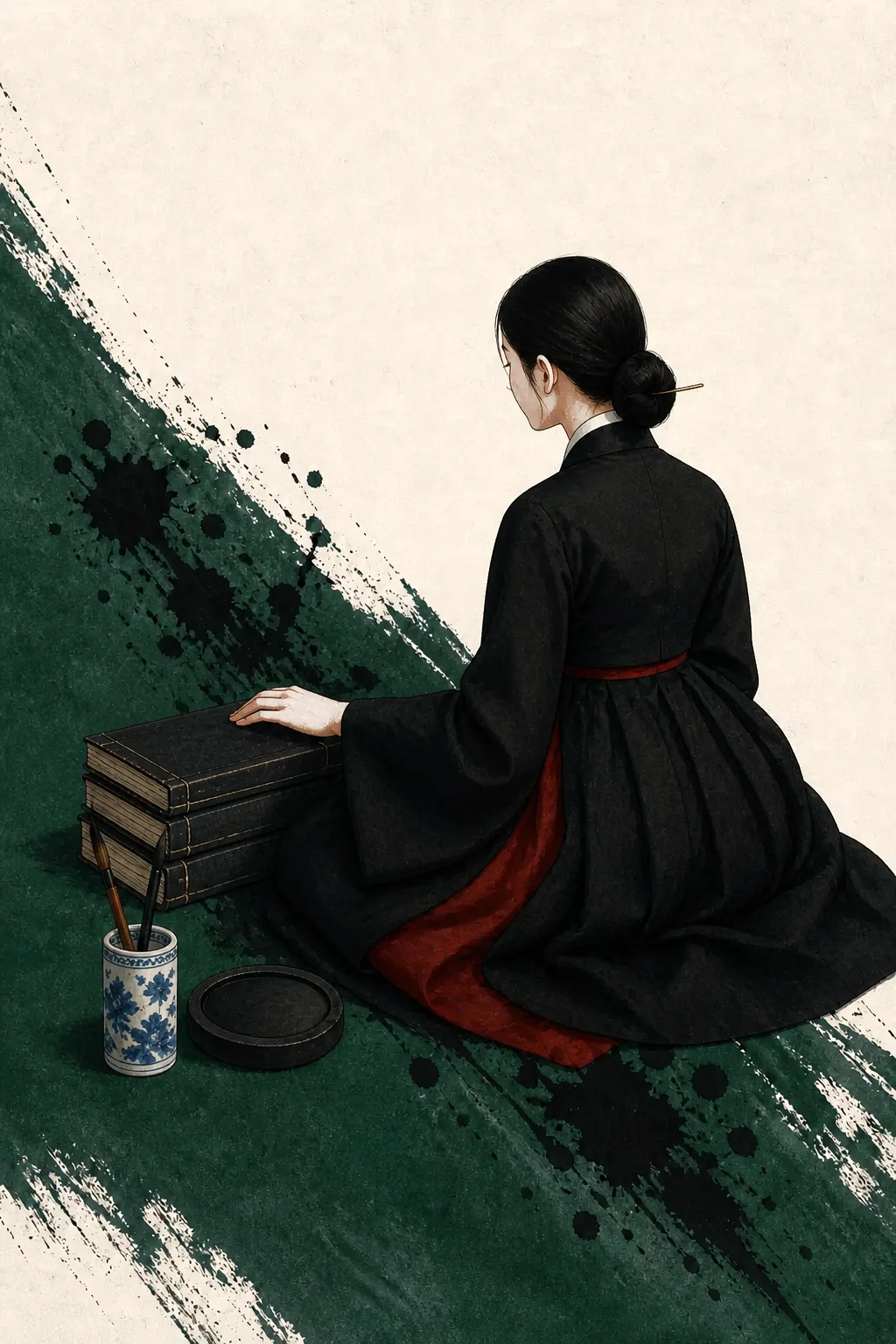
A woman in a black hanbok kneels beside a deep jade brushstroke sweeping across hanji paper, one hand resting on a stack of old thread-bound books, a blue-and-white brush holder and an inkstone below her, black ink drops along the diagonal.

Past-life expansion collection

The same person in other eras — eleven other lives at once.

What you open

  • The eleven stories left of the twelve one record reaches
  • The same person in other eras — eleven other lives
  • A different trade and a different hard year in each
  • The main story separate; only the expansions bundled
WHAT YOU RECEIVE

Every one of the eleven expansions: seven acts each, with its card front and plates. The main story is not included.

Read a sample passage

A real passage, read from someone else's record. Oddly enough, one of these lines tends to catch.

In the autumn of the year you turned forty, men from the city went house to house. An army stood outside the walls and the gates had been shut since the summer. They were taking in silver, they said. They weighed it, wrote out a receipt and carried it away.

Coordinate card

Your coordinate card, made from the pillars in your free reading. No separate purchase.

What you open

  • It comes with the free reading you finish
Included with the free readingView card details in the free reading
WHAT YOU RECEIVE

The card comes with the free reading you finish: your eight characters and five elements on one sheet, with no separate payment.