CELESTRY · REFLECTIVE SAJU / FOUR PILLARS
Reflective Saju: reading patterns in your own life
Bring a recent choice to mind. Celestry starts with Korean Saju (Four Pillars) and offers situations and questions you can compare with what happened in your own life. Your experience remains yours to interpret.
What makes it reflective?
A chart calculated from birth details and an interpretation of that chart are different things. Reproducing a calculation does not establish that an interpretation describes you. Read for differences as well as recognition.
Reading words and illustrations together
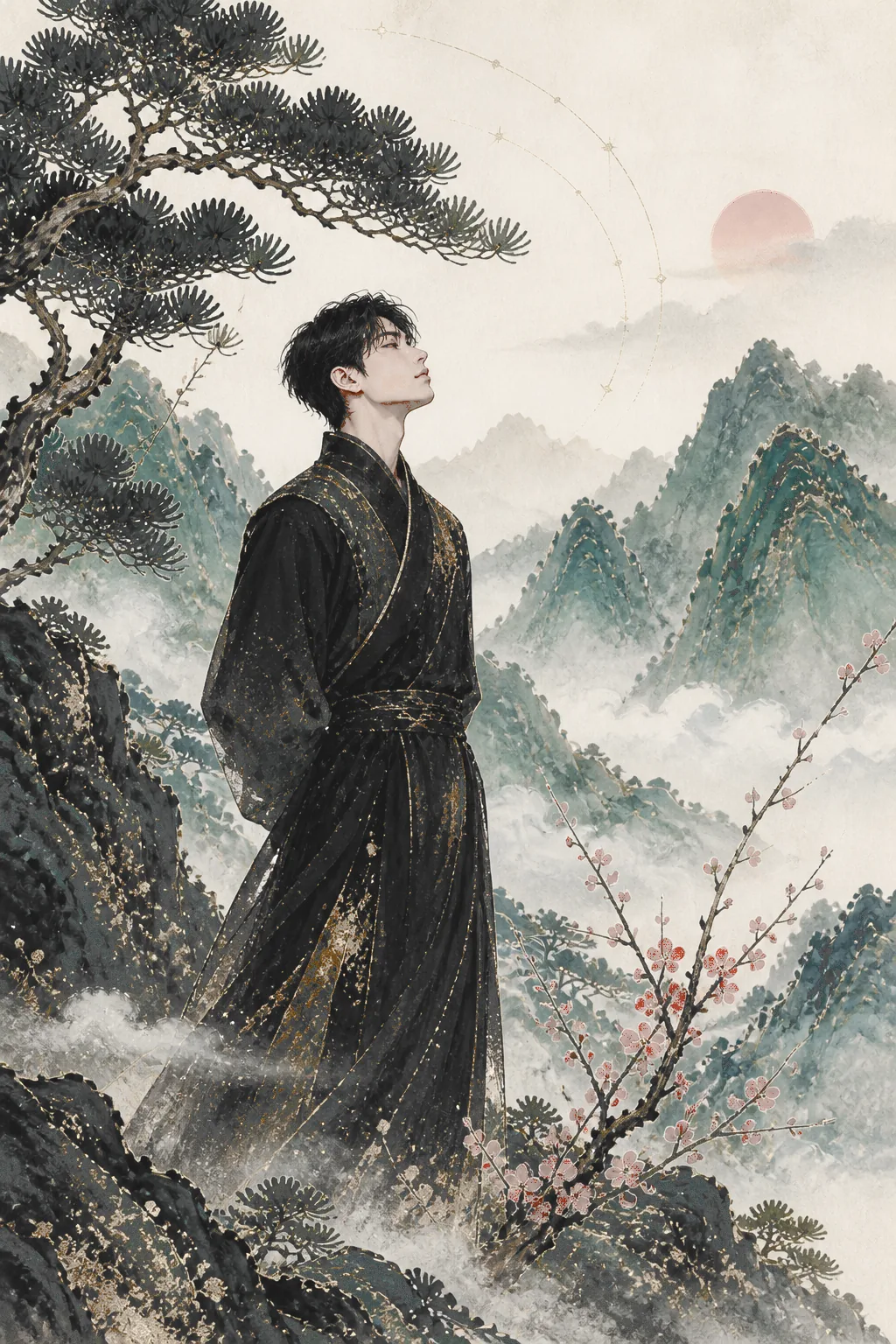
Celestry pairs its readings with illustrations rooted in Korean painting. Each image gives its reading a visual setting. Notice what draws your eye, then read the accompanying words and consider which situations from your life come to mind.
Try one concrete scene
Choose one recent decision. Write down the circumstances, what you did, and one question to check next time. Include a time when you chose differently. You do not need to accept an interpretation that does not fit.
Where to begin
Start with a free reading, then review the scope of any paid topic that interests you. This is a reflective reading practice, not a psychological assessment or a promise of therapeutic benefit.
Common questions
How is the calculation different from the interpretation?
The calculation turns a birth moment into eight characters, so the same input returns the same result. The interpretation is a hypothesis read from those characters, and how well it fits differs from person to person. CELESTRY keeps the two apart and shows the characters each reading was read from.
How do you read a reflective Saju chart?
Bring one recent decision to mind and write down the circumstances, what you did and one question to check next time. Compare the situations a reading offers with what you experienced — noting where it differs as well as where it fits — and let your own experience take precedence when it does not fit.
Why are the illustrations part of the reading?
Each image, painted in the Korean painting tradition, gives its reading a visual setting. Notice what draws your eye, then read the words beside it and consider which scenes from your own life come to mind.
Does this guide still apply if my birth time is unknown?
Yes. The parts that depend on the hour are left out rather than guessed. This guide explains a way of reading; it contains no personal result.